

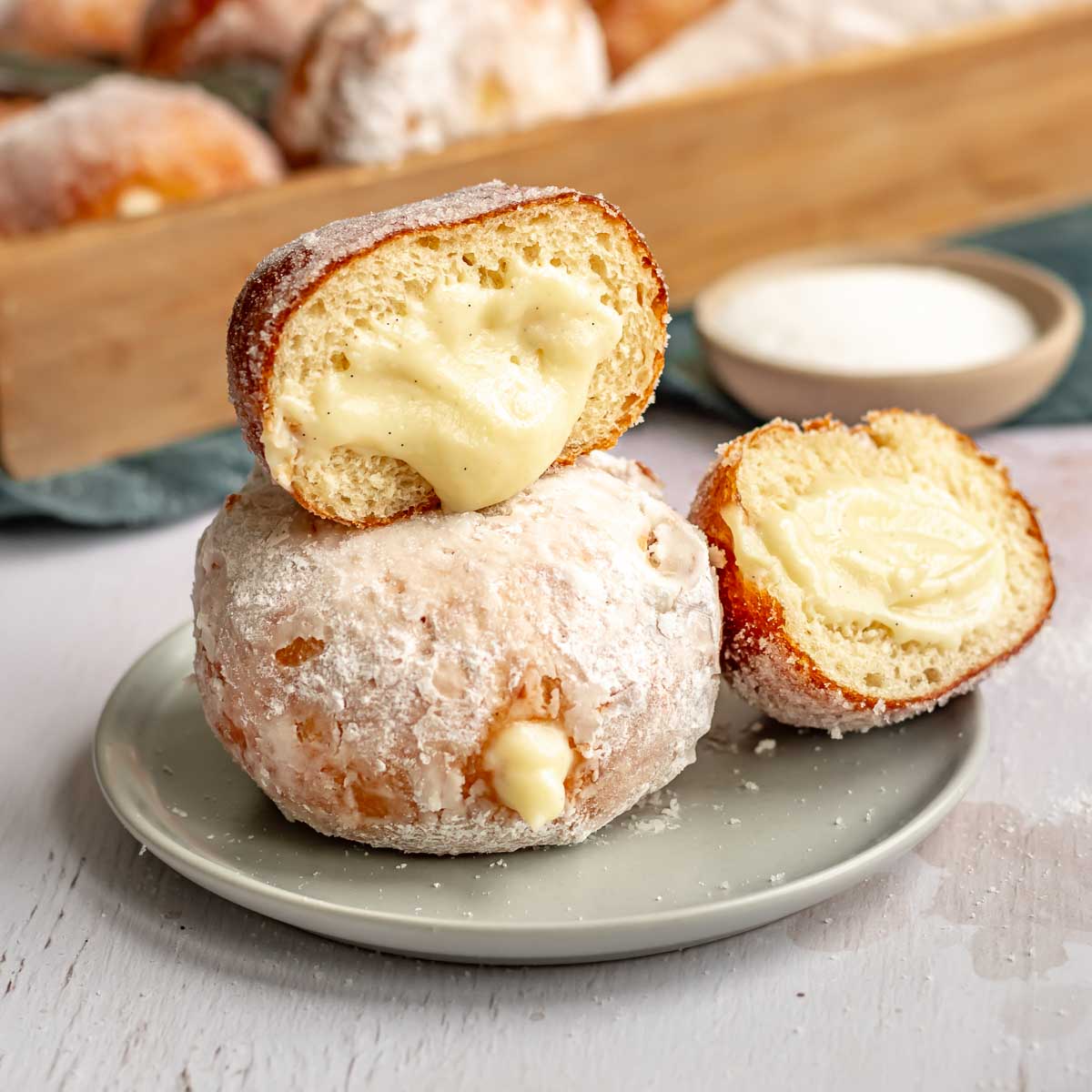
This guide breaks down how they do it, step by step, so a custard filled donut comes out full, neat, and consistent.
What causes a custard filled donut to overflow in the first place?
Overflow happens when pressure inside the donut rises faster than the dough can hold it. That usually comes from runny custard, a weak shell, or a nozzle pushed too deep and angled poorly.
Bakers reduce overflow by thickening the custard, cooling it properly, and using a repeatable injection method for every custard filled donut on the tray.
How thick should the custard be to prevent overflow?
They aim for custard that holds its shape but still flows through a piping nozzle. In practice, that means a custard that falls slowly from a spatula and settles without immediately flattening.
Many Australian bakeries use a starch-thickened custard base (often with cornflour) so it can be piped into a custard filled donut without turning watery as it sits.
Why does custard temperature matter so much?
Warm custard is thinner, and thinner custard escapes faster. It also softens the donut interior, which makes the cavity collapse and encourages leaks.
They usually fill with custard that is chilled and rested so viscosity stays stable during production. That single step reduces mess across a batch of custard filled donut runs, especially during busy morning bakes.
How do they build donuts that can hold filling pressure?
They produce a donut with a strong, even crumb and a thin but resilient crust. If the dough is underproofed, it resists and tears when filled. If it is overproofed, it becomes fragile and collapses.
Shaping consistency matters too. When every donut is similar size and density, the same fill setting works across each custard filled donut without surprises.
Where do bakers pierce the donut to control overflow?
They pick a point that gives a clean entry and a predictable cavity, usually on the lighter side seam or just off the centre line. The goal is to hide the entry while keeping the nozzle path straight.
They avoid piercing too close to the base because custard then pushes downward and out. A well-placed entry helps each custard filled donut accept the custard with less pressure.
What nozzle shape helps fill without splitting the donut?
They typically use a long, narrow filling nozzle designed for doughnuts, often with a slightly tapered end. The narrower tip reduces tearing at the entry point and improves control.
A smooth metal nozzle also helps because it slides in cleanly and seals against the dough while filling. That seal is a quiet but important reason a custard filled donut stays tidy.
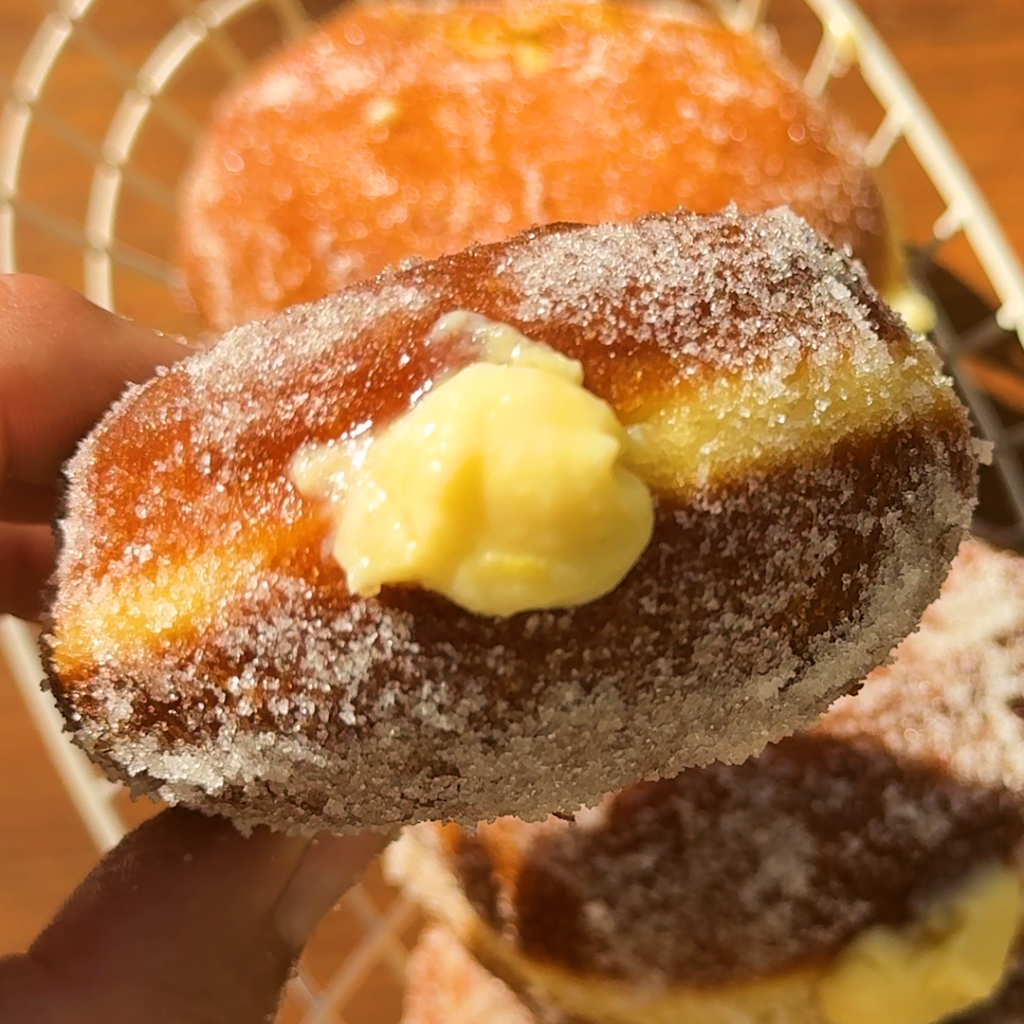
How do they create a cavity inside without blowing the side out?
They let the nozzle do the work. Once inserted, they start with a small amount of custard while gently withdrawing the nozzle, which forms an internal pocket without sudden pressure spikes.
They do not try to “inflate” the donut in one push. A gradual fill pattern is how they keep a custard filled donut from bursting or developing a single overfilled hotspot.
How much custard do they inject into each donut?
They target a consistent weight, not a visual guess. Many bakeries portion by pump setting, timed press, or scales during setup until the team hits the right dose.
The right amount feels heavy but not tense. If the shell looks stretched or custard appears at the entry, they reduce the dose for that custard filled donut size.
Why do some bakers fill in two stages?
Two-stage filling reduces internal pressure. They inject a partial amount, pause briefly, then finish with a second squeeze to top it up.
That short pause allows the custard to settle naturally into the crumb instead of being pushed towards the nearest weak point. It becomes especially helpful when preparing a custard filled donut in warmer Queensland conditions or during busy periods when several donuts need to be filled efficiently.
How do they stop custard leaking back out of the entry hole?
They angle the nozzle so the final custard ends deeper inside rather than right at the opening. They also stop pressure before withdrawing the nozzle, so custard is not pushed toward the exit.
Some bakeries lightly pinch or roll the entry point closed with fingertips. Done gently, it seals the custard filled donut without flattening it.
What role does sugar coating play in preventing overflow?
Sugar does not stop internal leaks, but it exposes them fast. If a donut is rolled in sugar too early, warm steam and surface oil can loosen the crust and encourage seepage.
They often allow the donuts to cool slightly before filling, then add sugar afterwards, although some workflows reverse the order. The important part is keeping each custard filled donut shell stable before pressure is applied, so the filling enters smoothly without splitting the dough.
How do they adjust technique for different styles of custard?
Pastry cream-style custard is thicker and usually easier to contain. A lighter, whipped custard can be airier but may weep over time, especially if stabilisers are low.
They match nozzle size and fill pressure to the custard style. If a bakery offers both classic and lighter versions, they often change pump settings so each custard filled donut stays consistent.
What equipment do Australian bakeries use to avoid overflow at scale?
Many rely on a piston depositor or doughnut filler with adjustable pressure and a foot pedal. That setup gives repeatable output and frees hands to control donut positioning.
Smaller shops may use piping bags, but they still standardise nozzle type, custard temperature, and portion size. Consistency is the real tool behind a clean custard filled donut line.
How do they train staff to fill fast without making a mess?
They teach a repeatable sequence: pierce, insert to depth, fill while withdrawing, stop pressure, then withdraw fully. It sounds simple, but the timing is what stops overflow.
They also set a visual and weight standard for what “correct” looks like. When every staff member follows the same method, each custard filled donut looks like it came from one pair of hands.
How do they handle hot days in Australia that make custard runnier?
They control temperature in stages. Custard is kept chilled, batches are rotated from the cool room, and only small amounts sit at the bench.
They may also slightly increase thickener or reduce milk ratio in summer production. Those small recipe tweaks keep a custard filled donut from turning into a leaking problem by lunchtime.
What mistakes lead to overflow even when the custard is thick?
The most common mistake is overfilling to chase an impressive burst. Another is using a blunt or oversized nozzle that tears the entry, creating a leak path.
Poor donut quality matters too. If the dough is thin in spots or the fry is uneven, the shell gives way under pressure and the custard filled donut loses shape.
How do they check quality without cutting every donut open?
They use a mix of weight checks and feel. A correctly filled donut has a predictable heft and a slight give, not a hollow bounce and not a tight balloon-like skin.
Some bakeries also do a set “cut test” from each batch. That small audit keeps the whole custard filled donut run on spec without wasting stock.
What is the simplest method that prevents overflow every time?
They keep custard cold and thick, they fill slowly while withdrawing the nozzle, and they portion consistently. Those three habits beat fancy tricks.
When done right, the donut looks clean outside and generous inside, with custard distributed evenly through the centre. This is how a bakery creates a reliable custard filled donut with a balanced filling and minimal risk of overflow, tray after tray.
FAQs (Frequently Asked Questions)
What causes a custard filled donut to overflow during filling?
Overflow occurs when the pressure inside the donut rises faster than the dough can contain it, often due to runny custard, a weak donut shell, or improper nozzle insertion. Australian bakers prevent this by thickening the custard, cooling it properly, and using consistent injection techniques.
How thick should custard be to ensure neat filling without overflow?
Custard should be thick enough to hold its shape yet still flow smoothly through a piping nozzle. Typically, it falls slowly from a spatula and settles without flattening immediately. Many Australian bakeries use starch-thickened custards with cornflour to maintain this ideal consistency during piping.
Why is the temperature of custard critical in preventing donut overflow?
Warm custard is thinner and flows too quickly, which can soften the donut interior and cause cavity collapse leading to leaks. Chilled and rested custard maintains stable viscosity, reducing mess and ensuring consistent filling during busy bakery runs.
How do bakers create donuts that withstand the pressure of custard filling?
They produce donuts with a strong, even crumb and a thin but resilient crust by carefully controlling proofing times—avoiding underproofing that causes tearing or overproofing that leads to fragility. Consistent shaping ensures uniform size and density for predictable filling results.
Where should bakers pierce the donut to minimize overflow risk?
The ideal piercing point is usually on the lighter side seam or just off the center line of the donut. This location offers a clean entry and predictable cavity while hiding the entry hole. Piercing too close to the base is avoided as it can cause custard to push downward and leak out.
What nozzle design helps fill custard donuts without splitting them?
A long, narrow filling nozzle with a slightly tapered end is preferred. Its narrower tip reduces tearing at the entry point and provides precise control. Smooth metal nozzles slide in cleanly and seal well against dough, helping keep each custard filled donut neat and tidy during production.